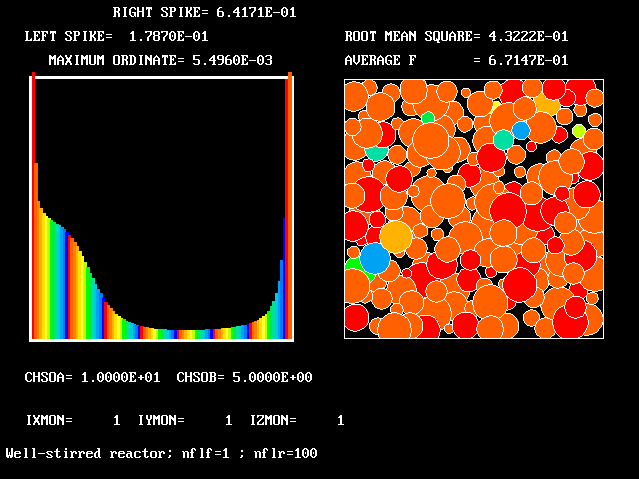
 A one-dimensional probability-density function, with probability-
density plotted vertically and temperature horizontally.
A one-dimensional probability-density function, with probability-
density plotted vertically and temperature horizontally.1. The task to be performed
Computer simulation of many turbulent-flow phenomena, especially those influenced by body forces or chemical reactions, requires:
The following picture shows what is meant by a probability-density function.
The PDF is the curve on the left of the picture. The task is to calculate its shape.
On the right is a graphical reminder of the fact that a turbulent fluid consists of a random- seeming assembly of fluid fragments in various states.
A one-dimensional probability-density function, with probability-
density plotted vertically and temperature horizontally.
The "spikes" on the left and right show that there are large amounts of extremely-cold and extremely-hot fluid.
The curve between them shows how much of the fluid is in the intermediate temperature ranges.
This information is needed for predicting, say:
Knowledge of the average temperature is of little or no use for these purposes.