Files in .stl format are widely used for the description of the shapes of solid bodies.
The nature of the format is fully described at this website, from which a single summarising paragraph has been extracted, as follows:
"An StL (StereoLithography) file is a triangular representation of a
3-dimensional surface geometry.
The surface is tessellated or broken down logically into a series of
small triangles (facets).
Each facet is described by a perpendicular direction and three points
representing the vertices (corners) of the triangle."
When PHOENICS introduces an object into its 'virtual-reality' editor, one of the permitted formats of file which defines the shape of the object is STL.
ASCII and binary STL files are supported.
There exists a directory within the PHOENICS package which contains a set of ASCII STL files, of which the names can be seen by clicking here.
One of these has been copied into a .htm file, and provided with the necessary HTM tags, in order that its contents can be inspected, and the easy readability of its format perceived, by clicking here.
How to import such files is discussed in detail in the report TR 326.
PHOENICS can not only use files created by other software packages: it can create them itself. (Note: the following description only applies to 'old-Parsol', it does not apply to SPARSOL or PARSOL.)
This facility has been provided in order that:
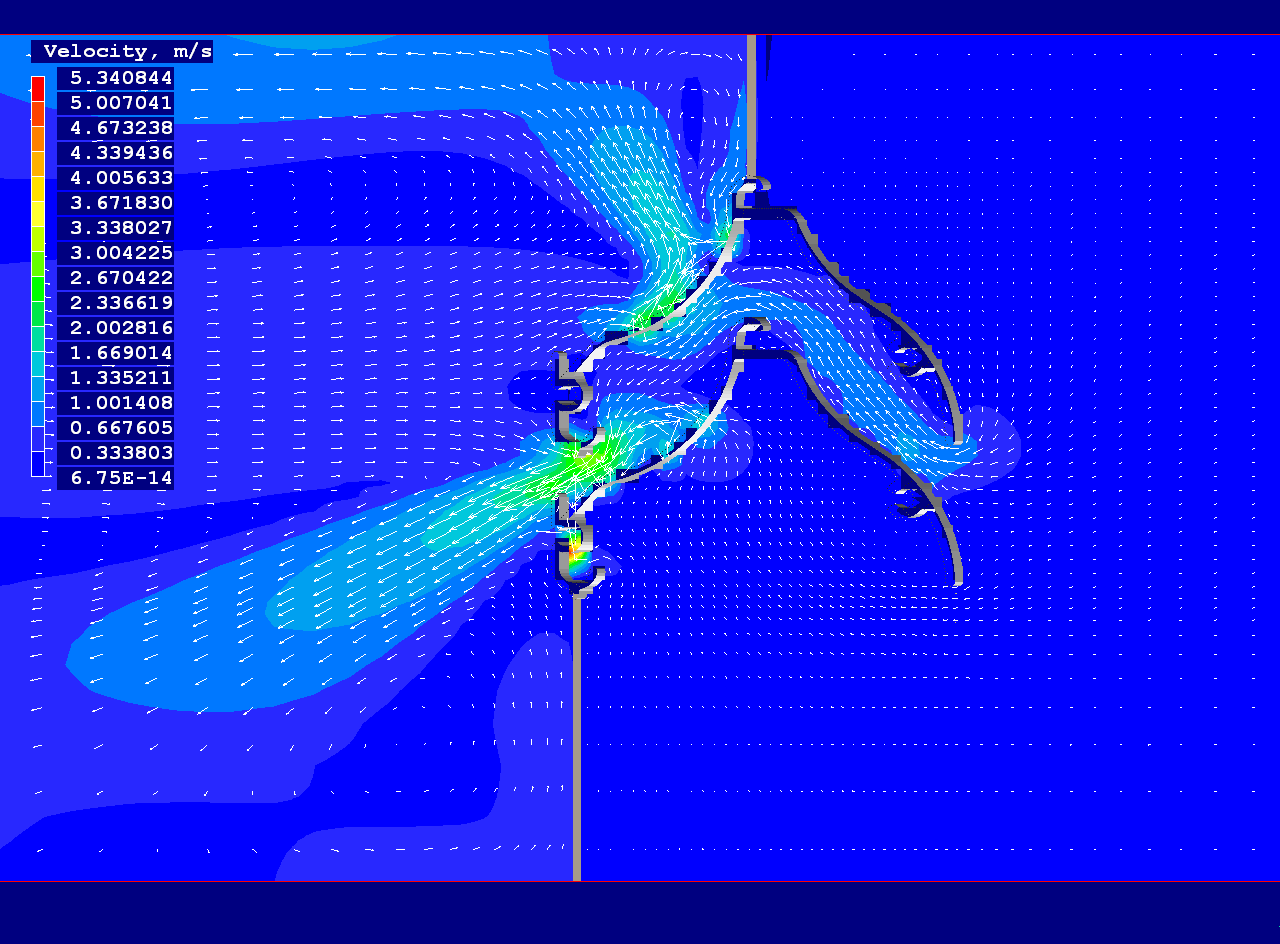
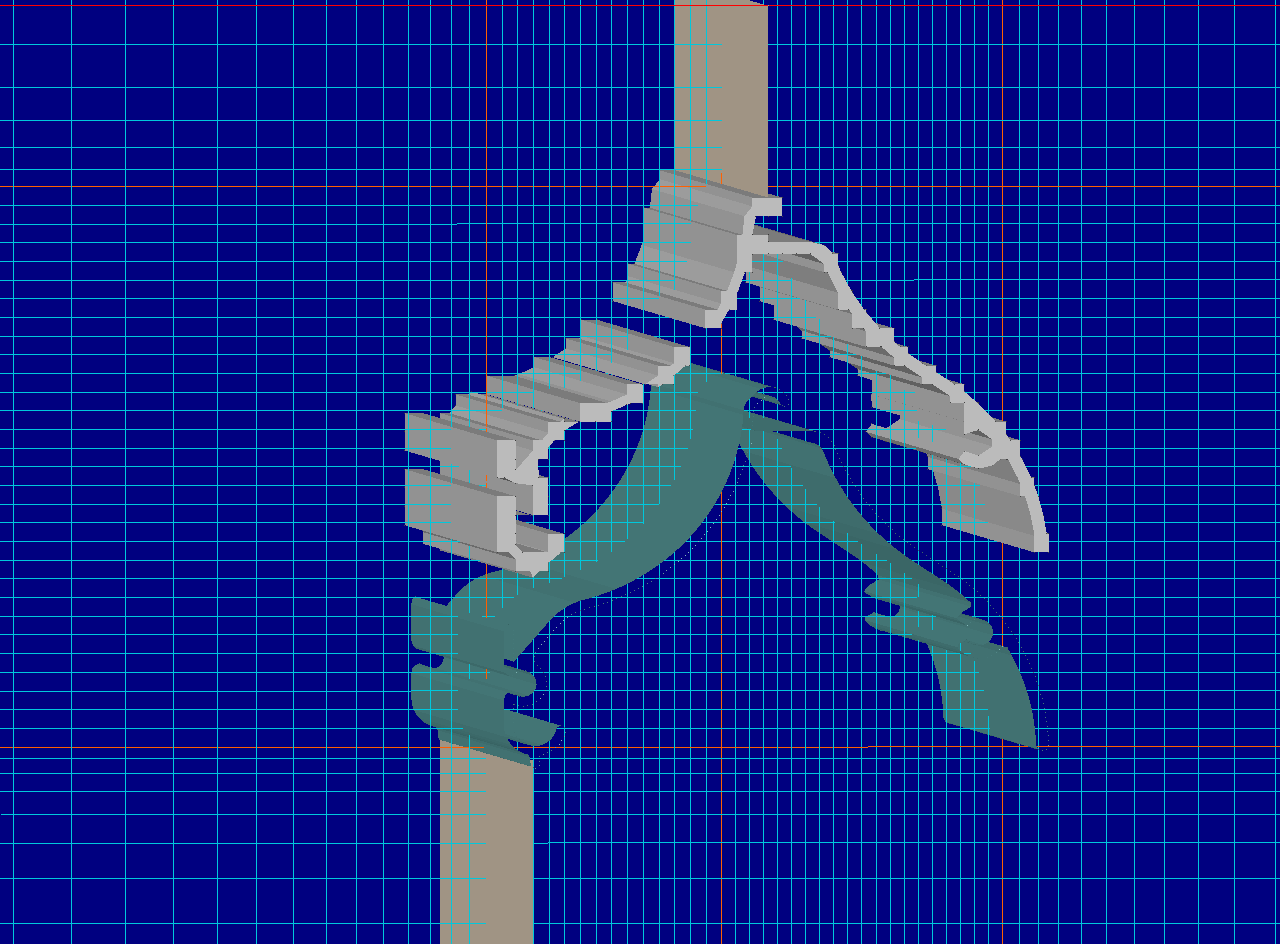
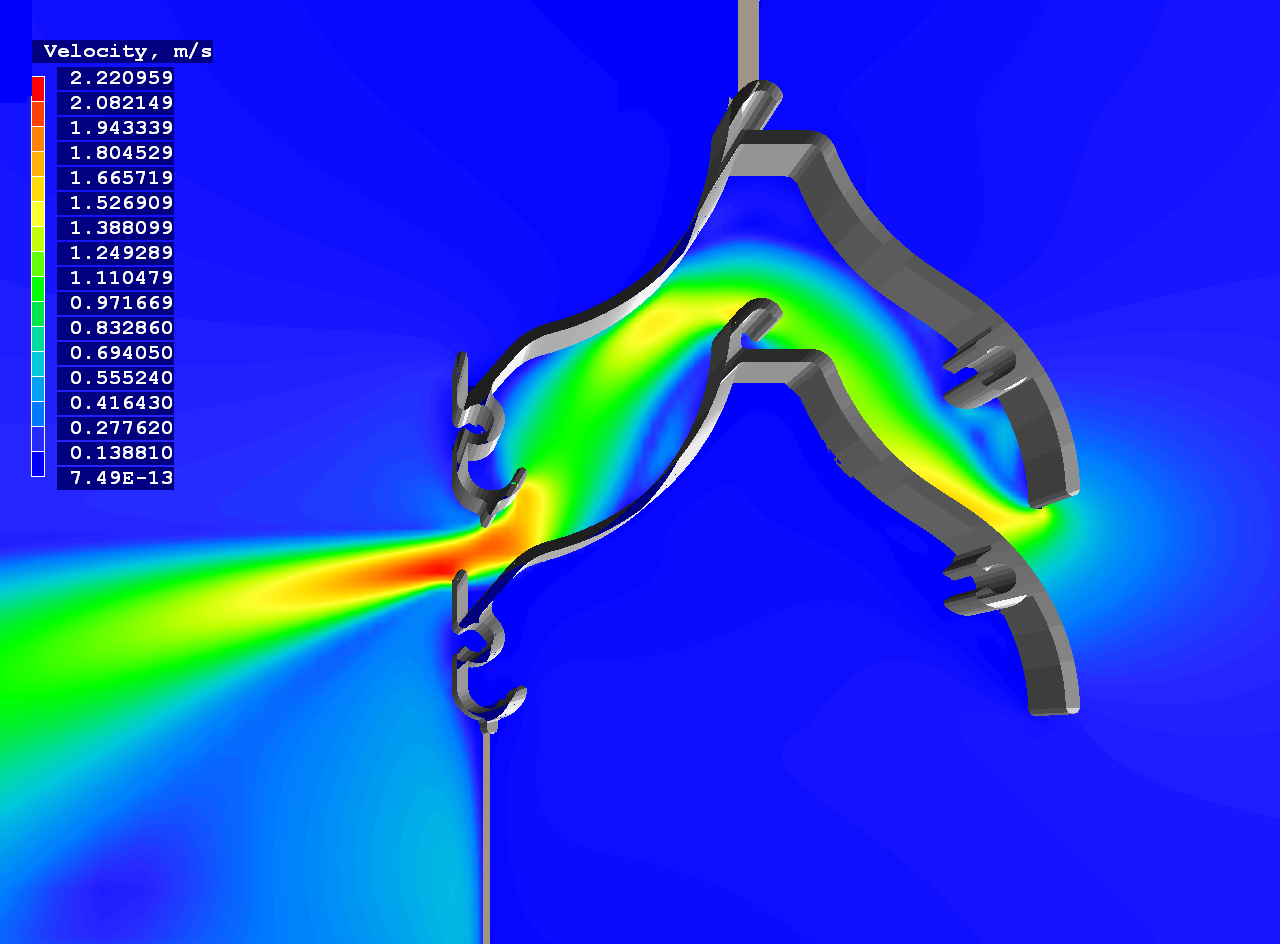
The first of these is the more important for PHOENICS users; and its value may be seen from the following sequence of images, concerned with the use of PARSOL to secure an adequate representation of flow through an array of louvres.
This causes the PHOENICS solver, EARTH, to create an stl file for each VR-object.
The general-purpose geometry-creation utility AC3D can also be used to read, edit or display STL files (both ascii and binary).
It is sometimes useful to be able to confirm the shape an object and integrity of the source file with this independent program.